
Oxygen Concentrators and Oxygen Tanks: A Side-By-Side Comparison – Oxygen is the most important element for the survival of each and every organism present on the earth. The functioning of the body is completely dependent on oxygen. The need of oxygen in the body expands from generating ATP through oxidative phosphorylation to regulate tissue metabolism. The hemoglobin present in the blood transports the oxygen from lungs to the tissue cells. From chronic lung disease to patients recovering from surgery all need oxygen to keep the life going.
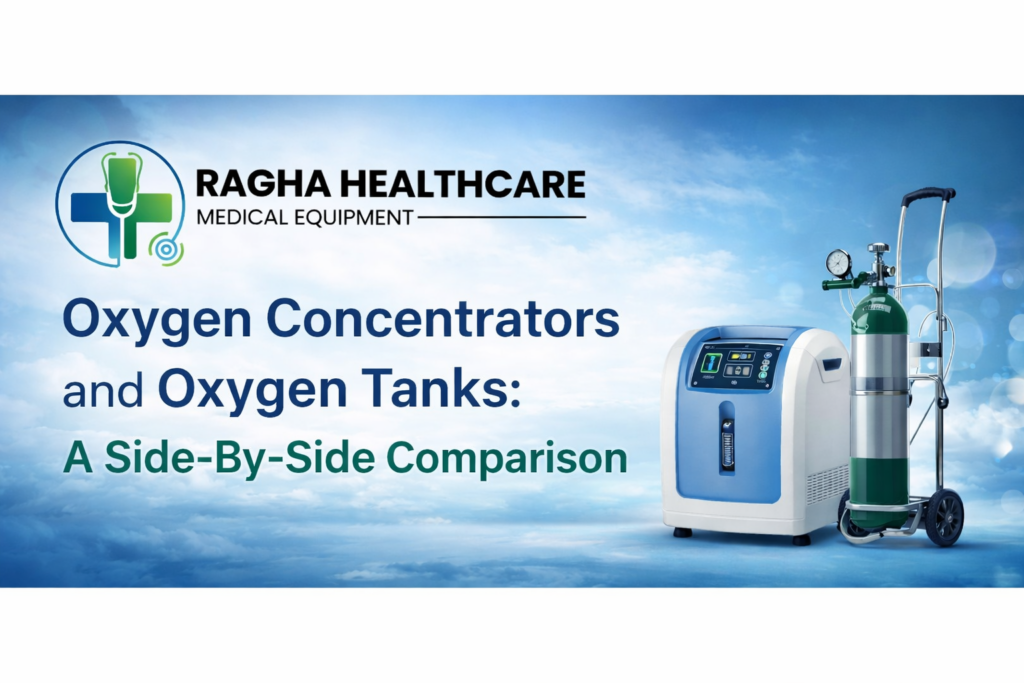
In the medical field there are two ways to deliver the supplemental oxygen that is via oxygen concentrator and oxygen tanks. Both process have their own benefits and cons and the patient or use might get confused which can be a better option for their needs, in this blog we will discuss about Oxygen Concentrators and Oxygen Tanks: A Side-By-Side Comparison between both that will help us understand about them and make a better choice.
About Oxygen Concentrator
An oxygen concentrator is a device that takes the surrounding air inside and then removes the nitrogen and other gas from it thus increasing the concentrator of oxygen. Unlike tanks, they offer a continuous, on-demand supply without refilling. They are essential for home oxygen therapy, typically requiring electrical power to operate.
Key features of Oxygen Concentrator:
- The Pressure Swing Adsorption (PSA) technology is used
- It can deliver 5-10 liters of oxygen per minute
- It used via a nasal cannula or mask
- It is best for home use and portable oxygen concentrators proved easier transportation
About Oxygen Tanks
Oxygen tanks store compressed medical-grade oxygen (gaseous cylinders) or very cold liquid oxygen in insulated reservoirs. A regulator reduces the high pressure to a usable flow (liters per minute, LPM). Cylinders provide a finite supply and must be refilled or swapped when depleted; liquid reservoirs evaporate into gas and can supply larger volumes in a smaller physical package. Duration depends on tank size and flow rate.
Key features of Oxygen Tanks :
- Contains Compressed oxygen under high pressure
- Controls the rate at which oxygen is delivered
- It can often be found in hospitals and medical facilities for emergency use.
- Must be kept in well-ventilated areas
Mobility and Portability | Oxygen concentrator vs Oxygen Cylinders
Oxygen Concentrator : Portable oxygen concentrators (POCs) function as travel equipment which ambulatory users can operate. The devices work with continuous flow and pulse-dose delivery systems which depend on the user’s chosen device. The equipment functions best for users who require oxygen while performing physical activities.
Oxygen Tanks : The weight of cylinders becomes heavier when their capacity increases because they lose their ability to be carried easily. The small “M” and “D” size cylinders enable users to carry them during brief periods but they need to be refilled because they deplete their contents. Liquid oxygen portable reservoirs deliver extended operation time through their compact design but they need dedicated systems for refilling. The duration of a cylinder depends on the combination of its flow rate and cylinder capacity.
If you need to travel continuously and looking for a a oxygen supplier that is easier to carry and do not need to refill then Oxygen Concentrator is best to choose as per the comparison made above Oxygen concentrator vs Oxygen Cylinders
Durability and Run time | Oxygen concentrator vs Oxygen Cylinders
Oxygen Concentrator : They deliver continuous oxygen supply during their operational period which includes both their electric and battery-powered states. The system serves as an ideal solution for continuous home usage and overnight oxygen treatment needs.
Oxygen tanks: The system delivers a predetermined oxygen supply which requires users to oversee pressure levels while they need to transfer between replacement cylinders or await scheduled liquid oxygen refills. The results of cylinder duration tests demonstrate that small cylinders exhaust their contents within minutes to a few hours depending on the specific flow rate and cylinder dimensions.
If you suffer from a condition that needs oxygen supply for a longer period of time then Oxygen concentrator is the best option for your needs.
Purity and Flow Comparison | Oxygen concentrator vs Oxygen Cylinders
Oxygen concentrator : The home concentrators provide most home concentrators with oxygen delivery at 90 to 95 percent which meets the clinical requirements of numerous medical prescriptions. The portable devices demonstrate reduced peak purity levels when they operate at their maximum flow capacity.
Oxygen tanks : The tanks deliver true continuous flow which operates at any clinician-prescribed LPM (e.g., 1–15 LPM) depending on the system. The majority of POCs deliver either continuous low-to-moderate flows or they use pulse-dose delivery which provides bolus on inhalation. The pulse-dose system saves battery power but it operates differently from continuous liters-per-minute delivery which is necessary for some patients who experience high respiratory rates and need to breathe through their mouths.
Cost & logistics | Oxygen concentrator vs Oxygen Cylinders
Servicing: Concentrators need periodic servicing (filters, compressors), and batteries on POCs eventually require replacement. Tanks need their regulators to be maintained while their refilling process requires management. Real-world expenses depend on insurance coverage and rental agreements and the operational methods of local suppliers.
Cost : Initial costs for cylinders are low yet they create continuous expenses through their need for refills and cylinder replacements. Liquid oxygen systems often require home delivery refills. Concentrators need more money for their initial purchase or rental but create lower expenses for gas delivery because they use ambient air and require only electricity to operate.
Safety and Hazard Comparison | Oxygen concentrator vs Oxygen Cylinders
High-pressure gas cylinders require secure transportation through upright containers which need to maintain cylinder stability because improper handling can cause fatal damage. The hazardous nature of leaks combined with regulator failures creates dangerous situations. The NHS together with other organizations provides comprehensive operational procedures and storage recommendations.
The devices provide safe operation when users follow manufacturer instructions and connect them to electrical ground systems but electronic and mechanical failures together with uncommon overheating and fire incidents have occurred in the past. The device recalls in the past included fire hazard models therefore users should register their devices and track all manufacturer and FDA notifications.
Which one should we choose?
Oxygen Concentrators and Oxygen Tanks: A Side-By-Side Comparison between both state that
Choose a Oxygen concentrator if :
- You are looking for long term, and 24/7 supply of oxygen
- You want to eliminate the need for the refill and get a reliable and continuous supply of oxygen.
- If you travel a lot and want a supplier that is portable and battery powered
Choose oxygen Tanks if:
- You need very high continuous flows that some POCs can’t provide.
- You will be in locations without access to electricity and need guaranteed continuous flow
- You prefer simple, regulator-based systems and have reliable refill logistics.
Conclusion
Both the Oxygen Concentrators and Oxygen Tanks have their own uses, advantages and disadvantages. A patient can have different types of need for the oxygen like if a person requires oxygen for a short period of time or just for recovering from a surgery then for them an oxygen tank is sufficient to fulfil the need. But for long term uses such as a patient suffering from serious issues that need continuous supply for oxygen then an oxygen concentrator is the best as it provides flexibility and portable options that enable the persons to continue their daily work. This blog on Oxygen Concentrators and Oxygen Tanks: A Side-By-Side Comparison will help you understand the detailed difference between both.