
Kidney failure home care: What equipment does a CKD patient need? – Chronic kidney disease affects over 850 million people worldwide, according to the International Society of Nephrology. In India alone, nearly 17% of the population shows some sign of kidney damage. These numbers are alarming, but what is more alarming is how many CKD patients are managing their condition without the right support at home.
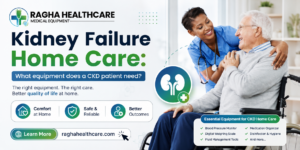
Knowing what equipment kidney patients need at home is one of the most important steps a patient or caregiver can take. The right chronic kidney disease home monitoring devices can catch dangerous changes early, before they turn into emergencies. They reduce hospital visits. They give families confidence. And they help patients live with dignity and stability.
This blog covers everything from basic monitoring tools to home dialysis equipment for CKD patients. Whether you are newly diagnosed or caring for a loved one in an advanced stage, this guide will help you understand exactly what is needed, why it matters, and how to get started.
Because good home care does not just support treatment, it can change outcomes.
Why the Right Home Care Equipment Is Essential for CKD Patients
CKD is a progressive disease. The kidneys slowly lose their ability to filter waste. And this damage happens quietly, often without obvious symptoms.
Most complications, like fluid overload, dangerous BP spikes, and electrolyte imbalance, develop silently between hospital visits. By the time a patient feels something is wrong, the situation may already be serious. This is exactly why chronic kidney disease home monitoring devices are not a luxury. They are a necessity.
Consider this: A CKD Stage 4 patient who skips daily BP monitoring may not realize their pressure has spiked to dangerous levels until they are rushed to emergency.
According to the National Kidney Foundation, patients who actively monitor their condition at home show significantly better long-term outcomes than those who don’t. The right equipment also helps caregivers. When families know what equipment kidney patients need at home and have it ready, they feel confident, not helpless.
Proper home dialysis equipment for CKD patients also reduces unnecessary hospital visits. This also helps in saving money and preventing health risks.
Complete List of Equipment a CKD Patient Needs at Home
Managing CKD at home requires the right tools. Each piece of equipment plays a specific role in keeping the patient stable. Knowing what equipment kidney patients need at home can make a real difference between a calm day at home and an emergency hospital visit. Here is a complete, easy-to-follow list.
- Blood Pressure Monitor- CKD patients need a blood pressure monitor because damaged kidneys directly cause high BP, and high BP further damages kidneys. It is a dangerous cycle that must be tracked daily. Check every morning and evening, at the same time each day. If readings are above 140/90 consistently, then inform your doctor immediately.
- Weighing Scale- Sudden weight gain means fluid is building up in the body, which is a serious warning sign in kidney disease. Weigh yourself every morning before eating or drinking anything. A gain of more than 2 kg in 2 days is a serious sign to watch out for.
- Blood Glucose Meter- Diabetes is the number one cause of CKD in India. Uncontrolled sugar silently destroys whatever kidney function remains. Check fasting sugar every morning and post-meal sugar 2 hours after eating. Consistently high readings mean they accelerate kidney damage faster than most people realize.
- Pulse Oximeter- CKD causes anemia, which reduces oxygen in the blood. Low oxygen levels can also signal fluid in the lungs, which is a serious emergency. Check once daily or whenever the patient feels breathless or unusually tired. If the SpO₂ reading is below 94%, then consult your doctor immediately.
- Home Dialysis Machine- A dialysis machine is required for Stage 5 or end-stage renal disease patients. Home dialysis equipment for CKD patients is life-sustaining. It allows treatment in the comfort of home. Use this machine only under a nephrologist’s prescription and guidance. Frequency depends on the type, peritoneal dialysis or home hemodialysis.
- Water Purifier / RO System- Tap water contains excess phosphorus, potassium, and other minerals. All these are harmful for kidney patients. Clean, low-mineral water is essential daily. Check TDS levels regularly. Ideal TDS for kidney patients is below 50 ppm.
- Urine Output Measuring Container- Urine output is one of the most direct signs of how well the kidneys are working. It is a simple but powerful chronic kidney disease home monitoring tool. Collect and measure total urine output every 24 hours. If output is below 500 ml per day (oliguria), then the patient needs urgent medical attention.
- Pill Organizer- Most CKD patients take 5 to 10 medicines daily. Missing even one dose of a BP med or phosphate binder can cause serious harm. Therefore, never skip medications.
- Comfortable Recliner or Chair- Home peritoneal dialysis sessions last 4 to 6 hours. A proper chair prevents back pain, pressure sores, and discomfort during this time. Use during every dialysis session or whenever the patient needs extended rest. Chairs that are too low or too soft are harder for the patient to get up from safely.
How to Choose the Right Blood Pressure Monitor for Kidney Patients
Not all BP monitors are the same. For a CKD patient, choosing the right one is important. An inaccurate reading can give false comfort or cause unnecessary panic. Since blood pressure management is at the heart of chronic kidney disease home monitoring, investing in a good monitor is worth every rupee.
Here is what to look for:
- Upper Arm is better than Wrist monitors: Upper Arm monitors give readings that are much more clinically accurate. Wrist monitors rely on position and movement and are not as reliable for CKD patients on a daily basis.
- Look for irregular heartbeat detection: This is an important feature to consider for those CKD patients with heart conditions. This feature alerts the user if it detects an unusual heartbeat during a reading.
- Memory storage: Be sure to choose a monitor that will store a minimum of 60 readings so you can compare readings on an everyday basis and report accurate information to your physician.
- Bluetooth or app connectivity is a bonus: Some monitors sync with smartphones. This makes it easy to share readings with your nephrologist during teleconsultations.
- Measure cuff size before purchasing the monitor, as this will give a faulty reading. Measure patients’ arm circumference and compare it with the cuff size.
- Use validated devices. Devices need to be clinically validated. In India, check for an ISI mark or any device validated by international bodies such as ESH (European Society of Hypertension).
Take measurements always at the same time of day, morning before the patients’ morning medications; evening, after rest, without taking measurements just after drinking tea; after exercise; and after emotional stress.
Cost of CKD Home-Care Equipment in India
One of the first questions families ask after a CKD diagnosis is, “How much will all of this cost?” The truth is, knowing what equipment kidney patients need at home and buying it wisely can actually save lakhs in hospitalization costs over time. Here is a clear breakdown.
| Equipment | Budget | Mid-Range | Premium |
| Blood Pressure Monitor | ₹800 – ₹1,500 | ₹1,500 – ₹3,000 | ₹800 – ₹1,500 |
| Blood Glucose Meter | ₹500 – ₹1,000 | ₹1,000 – ₹2,500 | ₹800 – ₹1,500 |
| Pulse Oximeter | ₹500 – ₹800 | ₹800 – ₹1,500 | ₹800 – ₹1,500 |
| Digital Weighing Scale | ₹400 – ₹800 | ₹800 – ₹2,000 | ₹800 – ₹1,500 |
| Urine Measuring Container | ₹100 – ₹300 | – | – |
| Pill Organizer | ₹100 – ₹500 | ₹500 – ₹1,000 | – |
| RO Water Purifier | ₹5,000 – ₹8,000 | ₹8,000 – ₹15,000 | ₹15,000+ |
| Recliner / Care Chair | ₹5,000 – ₹10,000 | ₹10,000 – ₹20,000 | ₹20,000+ |
| Home Peritoneal Dialysis Machine | ₹50,000 – ₹80,000 | ₹80,000 – ₹1,20,000 | ₹1,20,000+ |
| Home Hemodialysis Machine | ₹3,00,000 – ₹5,00,000 | ₹5,00,000 – ₹8,00,000 | ₹8,00,000+ |
Prices vary by brand and city. You can buy basic chronic kidney disease home monitoring devices on Amazon, Flipkart, or through trusted medical suppliers. For home dialysis equipment for CKD patients, always buy through a hospital-recommended vendor or a home care provider like Ragha Healthcare.
Does Health Insurance Cover CKD Home Care Equipment?
Yes, but only if you know where to look.
Ayushman Bharat (PMJAY)- Covers dialysis treatment for eligible patients. Some states have extended this to home-based dialysis. Check your eligibility at pmjay.gov.in.
Private Health Insurance- Check your policy wording for the “Domiciliary Treatment” or “Home Care” clause. Where available, this may include home dialysis equipment, nursing visits, and consumables like PD solution bags. A critical illness rider may also provide a lump sum usable for equipment.
You should ask 4 questions to ask your insurer.
- Does my policy cover home-based or domiciliary treatment?
- Is home dialysis equipment reimbursable?
- Are monthly dialysis consumables covered?
- Does my critical illness rider cover CKD or ESRD?
Always get answers in writing from your insurer; verbal commitments often fail at claim time.
Financial Support If Insurance Does Not Cover It
Do not lose hope if insurance falls short. There are real options available:
- The iKidney Foundation and other NGOs provide financial aid and equipment support to CKD patients in need.
- States like Kerala, Tamil Nadu, and Delhi have government hospital schemes that subsidize dialysis and consumables.
- EMI schemes many home care providers offer monthly payment plans for dialysis machines.
A single CKD emergency hospitalization can cost ₹30,000 to ₹200,000 or more. A good BP monitor costs ₹1,500. A weighing scale costs ₹600. Small investments in the right equipment today can prevent very expensive emergencies tomorrow.
Conclusion
CKD is lifelong, but with the right equipment and support, it is manageable at home. From basic monitoring devices to advanced home dialysis setup, every tool plays a role in protecting your loved one’s health. Do not wait for an emergency to act. You can start building your home care plan today with support from Ragha Healthcare’s expert team.